A lot of health advice assumes we have endless time, energy, and headspace. That if we just cared enough, planned better, or tried harder, we could optimise everything. And if we’re not managing it, the problem must be us. I don’t think that’s true. I think many of us are constantly making thoughtful compromises, trying to do the best we can for ourselves and our families within very real constraints. Parenting is just one place where this becomes obvious, but the same trade-offs show up with illness, caring for ageing parents, demanding work, or any season where energy is limited. For me, most days are a series of trade-offs rather than ideal choices.
Screen time while I’m trying to cook is a good example. I’ve seen the videos of perfectly behaved children calmly helping to prepare nutritious meals, everyone smiling. I tried this recently. The result was a whole tub of chia seeds on the floor, a half-eaten banana smeared all over the toddler tower, and raw green beans being eaten enthusiastically, which felt like a win, before being spat straight back out with a loud “yuk yuk”. The end result was me stressed and trying not to lose my temper, a messy kitchen that added another layer of stress, and chia seeds stuck to my socks, which was deeply annoying. By the time dinner was ready, I was irritable, and that mood carried on into the evening.
If I’d put Teletubbies on for half an hour, the situation would have looked completely different. We still would have had a nutritious, home-cooked meal. Yes, according to the internet, I would have “fried her brain” with thirty minutes of questionable television, but she would also have had a calmer, less irritable mum for bath time and bedtime. In hindsight, expecting a seventeen-month-old to help with dinner was probably slightly over ambitious.
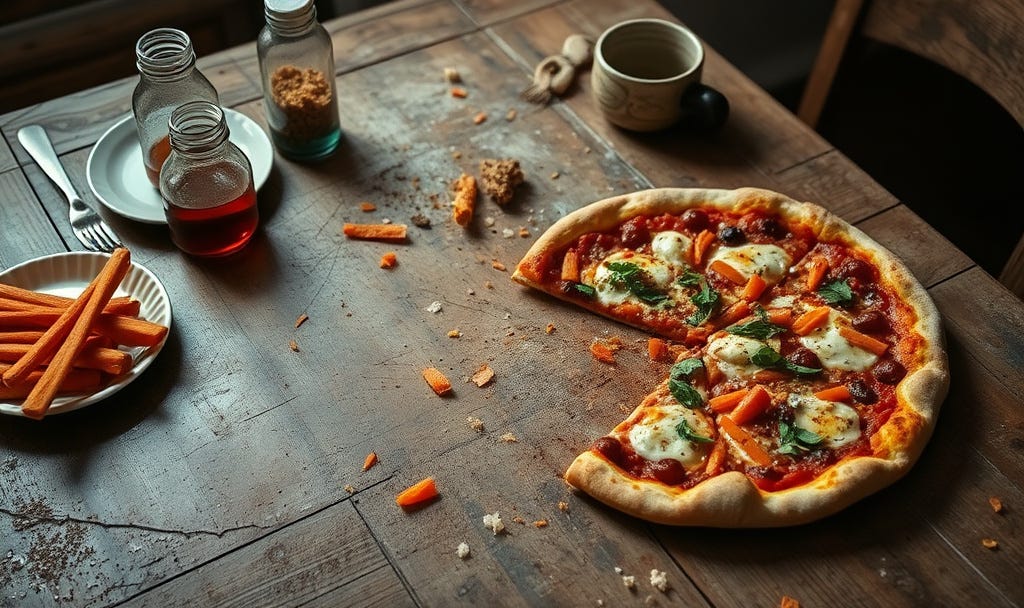
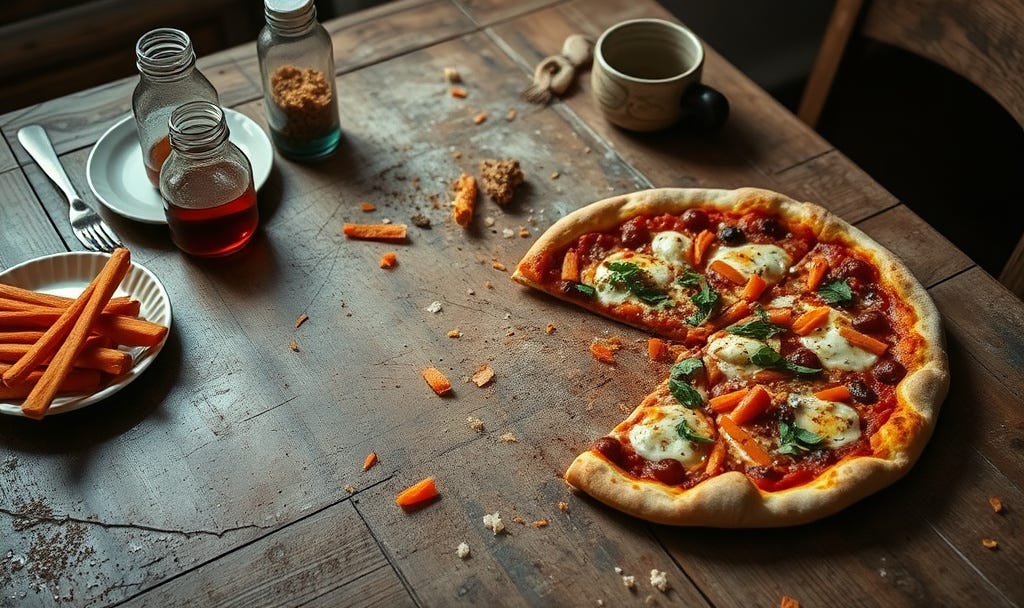
Food, more broadly, is another place where trade-offs show up clearly. By the time Friday comes around, we are usually completely depleted. The washing is piling up, the fridge is pretty bare, and all the home-cooked food we made earlier in the week has been eaten. I now buy pizzas to keep in the freezer “just in case”, and without fail, we use them every Friday. Each time, I feel an overwhelming sense of relief. Supermarkets are clearly responding to concerns about ultra-processed foods, and I’ve noticed some genuinely positive changes. I’ve found reasonably priced sourdough pizzas that the whole family loves and that don’t contain a long list of ingredients with numbers or words I can’t pronounce.
I usually serve them with cucumber and carrot sticks, which makes me feel better, even though I’m often the only one who eats the vegetables. But the end of the week is calmer, the children are happy, and it takes a significant weight off my shoulders. That feels like a trade-off I’m comfortable with.
Sleep is another example. I mentioned this briefly in my previous article, but it’s worth returning to. If I’m honest, and it’s slightly embarrassing to admit, I usually turn the lights out around 8.30 pm. I do it deliberately. It gives me a buffer for the inevitable night wakes and early mornings. The choice is usually between six or seven hours of sleep, often broken, or four to five hours if I stay up later. I do not function well on the latter. A bear with a sore head is a very accurate description.
Yes, I lose “me” time. I lose evenings with my husband, and that isn’t ideal. But I also know the alternative is worse. Less sleep means less patience, more emotional reactivity, and much less capacity to cope with the day ahead. And sometimes, on good nights, it actually works beautifully. I’ll wake early, often around four (I know this will sound mad to some people), having had a solid seven hours. The house is silent, everyone else is asleep, and I get a short window entirely to myself. That quiet, empty house feels like bliss.
Cooking for the whole family is another constant negotiation. I find it mentally exhausting trying to balance nutritious meals, children’s preferences (which seem to change daily) and my husband’s keto diet. My own preferences sit firmly at the bottom of the list. It’s time-consuming and requires a surprising amount of emotional energy and decision-making.
Our diet is fairly repetitive. There is a lot of spaghetti bolognese, chicken curry, and pasta in general, because whatever goes with the pasta, the children will usually eat. They’ve only ever had wholemeal versions, so they don’t even know white pasta exists, and I plan to keep it that way for as long as possible. Broccoli on its own? Absolutely not. Broccoli mixed through pasta? Lovely. Cooked peppers? No chance. Peppers in pasta? A firm favourite. Kidney beans are apparently disgusting, unless they’re in chilli served with pasta, in which case it’s suddenly their favourite meal. You get the idea.
I vary the vegetables as much as I can and sneak in lentils and other bits where possible, so there is some variety. But it is boring, and at the moment, I don’t get a huge amount of enjoyment from food. Still, there isn’t really an alternative in this season, and I’m fairly sure that will change when things ease up a bit. For now, this will have to do.
None of this is unique to food or children. It’s simply where the friction shows up most clearly for me right now. I don’t see these choices as failures anymore. They’re not evidence of apathy or lack of care, but of living in a phase where energy is finite and priorities compete. I’m trying to step back from the constant second-guessing and over-analysis, and accept that doing something reasonably well, consistently, is often better than chasing an ideal that only exists on paper.
Leave a Reply